
A cleared alert is not a confirmed repair
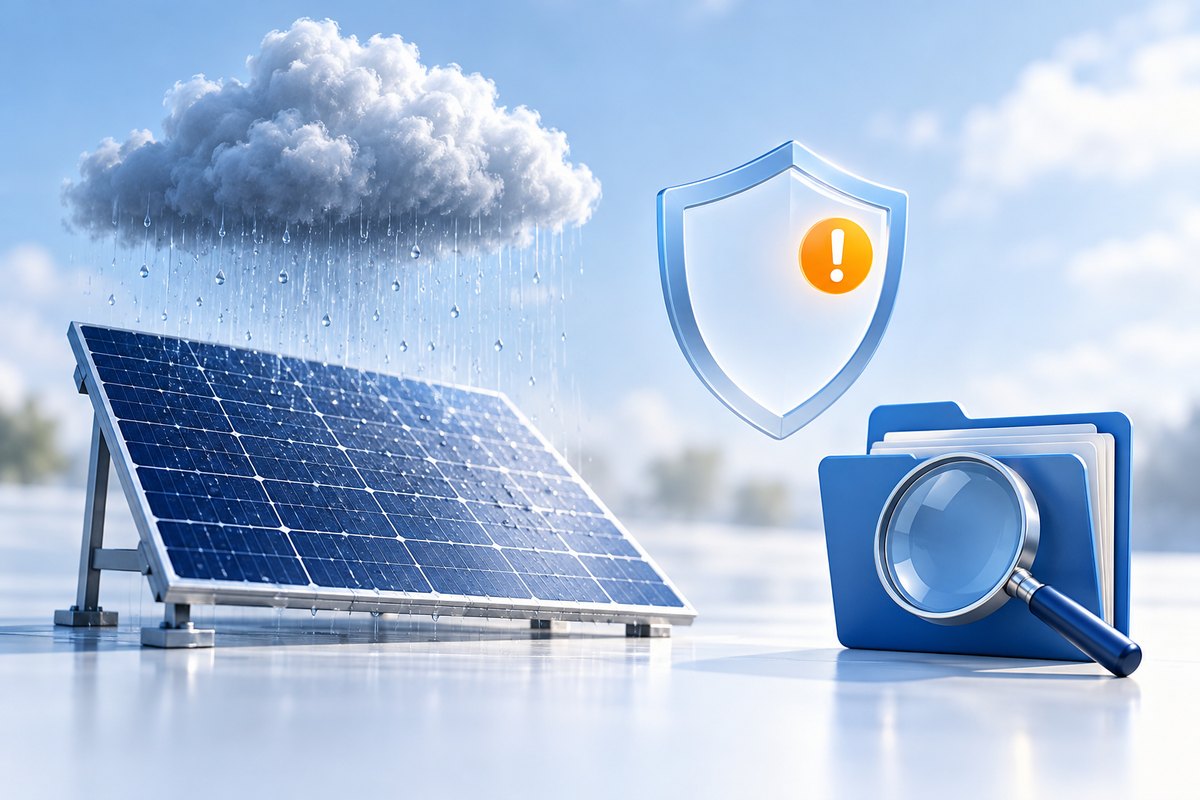
Suppose a solar app reports an insulation fault on a rainy morning with no generation, then resumes normal production later. The building operator should report the event even if it has cleared. A changed display establishes the current observation; it does not confirm that every cable and component is sound.
Do not turn “after rain” into a diagnosis that rain damaged the inverter, or dismiss it as harmless moisture. Separate observations from hypotheses so inspection does not begin with a guessed replacement. This is a service-reporting guide, not a do-it-yourself electrical test procedure.
What the message does and does not establish
SMA explains that low DC insulation resistance can prevent grid connection; faults involving insulation or connectors may appear intermittently in rain or dew and require qualified inspection. Its codes and thresholds are not universal inverter codes.
Send the model and complete message, not just a remembered number. Identify the affected unit when one app covers several inverters. The service team should use that model’s manual rather than an internet screenshot, and should not infer warranty coverage from an event name alone.
Connect time, weather and production records
Keep observed start and end times, the message, unit identifier, generation graph and event history available to your account. Note observed rain, dew or building cleaning. If the actual start is unknown, record when you first noticed it; do not invent earlier timestamps.
Hypothetical record: Monday’s message was seen at 07:20 and generation at 09:10; no message was observed on a dry Tuesday. Report both days without declaring a permanent recovery. If app time differs from photo time, disclose that difference to avoid matching the wrong events.
Separate operator observations from electrical work
Operators can collect app records and observations from safe areas. Do not open covers, unplug connectors, test insulation, short circuits or change protective settings to restore output. Never spray water to recreate the fault. Qualified personnel must define the test method and work area for the actual system.
If there is a burning smell, smoke or an accessible hazard, keep people away and use the site’s emergency channel. Do not approach for a better photo or delay hazard response to complete a record. Shutdown or restart actions must follow assigned procedures performed by trained personnel.
Close the case with findings and follow-up
Ask the report to distinguish findings, unresolved questions, completed work and follow-up conditions. If the fault was absent during inspection, record that limitation and how a recurrence will be reported. “It switched on” should not be the sole closure criterion.
For Kintury Energy’s published after-installation care service, prepare the event record and model details, then agree on the contact and post-work checks within the project scope. Good records reduce communication gaps but do not replace inspection or imply every recurrence has the same cause.