
Programme objectives
- To give participants the fundamentals of solar systems, how solar panels work, the key components of a system, and the differences between on-grid, hybrid and off-grid, so they can correctly choose the right system for their own home or business.
- To enable participants to calculate system size (kWp) and battery capacity, and to assess the return and payback period, using their own electricity bills and usage habits.
- To enable participants to read equipment specifications, buy a complete set of components for a whole system, and recognise sub-standard equipment — a major cause of damage and fire. Also to give participants a correct understanding of installation procedures under professional practice and safety standards, with a clear line between work they can do themselves, work that requires a certified electrician, and work that requires a licensed engineer's sign-off.
- To make participants aware of workplace safety: DC electrical hazards, working at height, and the correct use of personal protective equipment.
- To enable participants to complete the paperwork, notify the local authority, and apply for grid-interconnection approval, as well as understand the tax deductions and power purchase schemes available to them.
Who it is for
- Homeowners with bills of 3,000 baht a month or more who want solar but do not want to overpay, and want to understand the price structure before deciding.
- People who intend to buy the equipment and supervise the work themselves, with some trade background or a hands-on streak, who want to know what to buy, how to install it safely, and how to get the permit approved first time.
- Owners of orchards, farms or land outside the grid supply area who need an off-grid system for water pumps, lighting, freezers or CCTV.
- Shop owners, small factory owners or building managers whose electricity use is mainly during the day, who want to assess the value and plan an installation using their own real numbers.
Note: this course is aimed at people who own the home, building or business where the system will actually be installed. Those renting a house or living in a condominium generally cannot install a grid-connected system.
Course content
- The price structure of a solar installation — what the money paid to a contractor actually covers, and which parts genuinely save money if you do them yourself.
- Four systems, four approaches — on-grid, hybrid, off-grid and AC-coupled: how to choose correctly from the start, plus the 5 traps self-buyers fall into most often.
- Workshop: size the system for your own building — read your bill properly, find the system size (kWp) and battery capacity, and calculate your own payback period.
- Selecting and checking equipment specifications — panels, inverters, batteries, and a 23-item checklist of everything one system needs.
- The 12 installation steps and working safely — including the 6 non-negotiable risk points and how to calculate strings to match the inverter.
- Where the line falls — what you can do yourself, what needs a certified electrician, and what needs an engineer's signature.
- Paperwork and the 4 stages of grid-connection approval — the documents, the fees, the real timeline, and why applications get sent back.
- Benefits worth knowing — tax deduction measures, the public solar scheme, and a summary of the 7 steps from today to the day the system goes live.
- Q&A and download of the course handbook
What participants receive
- Three numbers for your own building before you go home: how many kW you should install · how much you save per month · how many years to payback.
- The course handbook, with calculation worksheets and an equipment checklist.
- A certificate for participants who meet the criteria (at least 80% attendance and a submitted calculation worksheet).
- Bonus: a free, no-obligation site survey by our team, with an analysis of your building and installation options. Lunch, refreshments and parking included.
Free of charge
Register here: https://www.kintury.com/apply/solar-diy-01
For any questions, contact us on LINE: @kintury
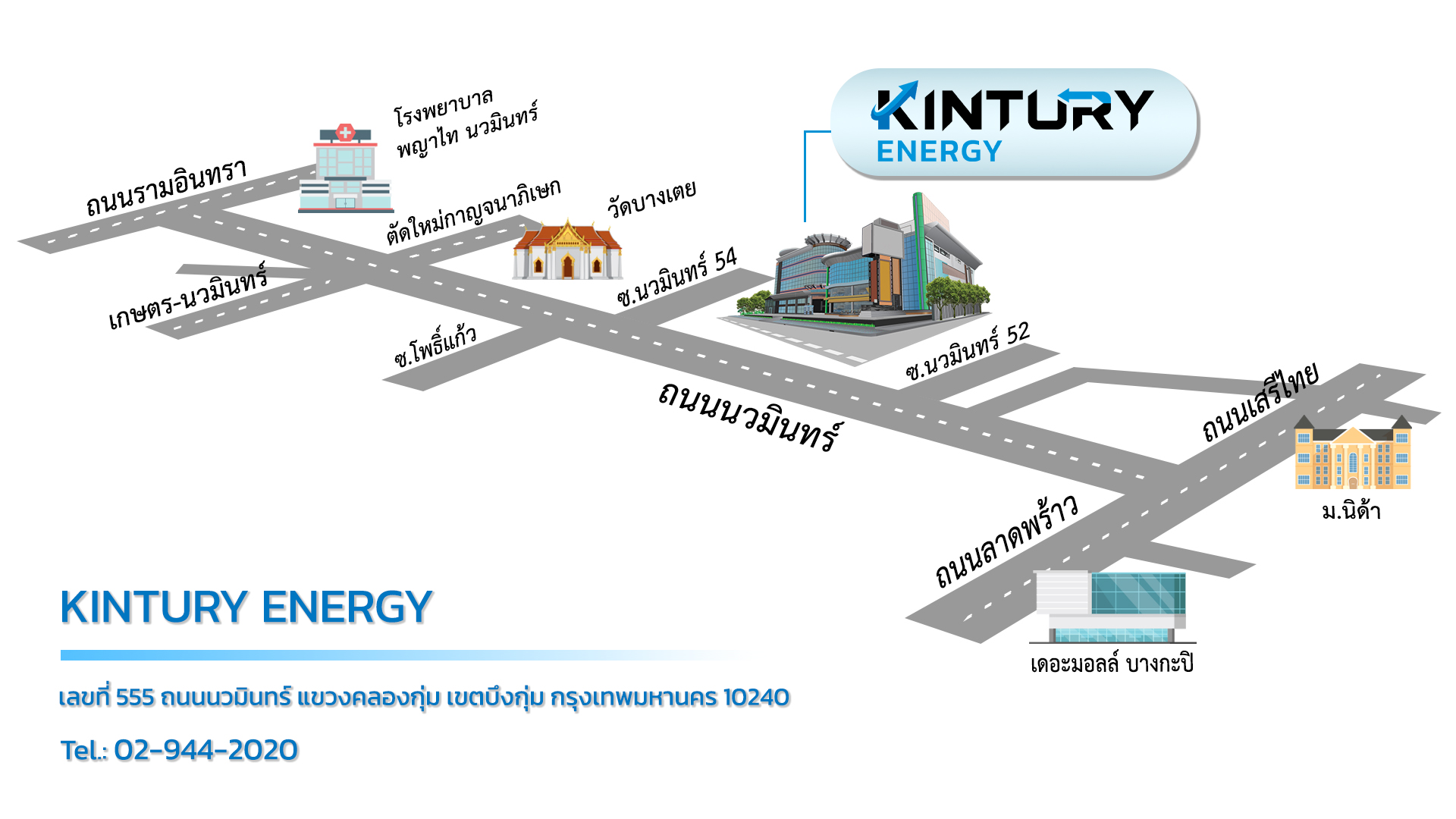
Company map: