
Water-resistant is not enough to choose a location
When an inverter proposal specifies IP65 or IP66, do not reduce it to a blanket statement that the device is waterproof. The code describes enclosure protection under defined conditions, not suitability for every water exposure. Building owners should consider the model, manual and site information together, especially where people wash surfaces, water collects or previous flooding reached the proposed location.
Read the two digits separately
Eaton's explanation distinguishes the first digit, covering access to hazardous parts and solid foreign objects, from the second digit, covering water. A first digit of 6 denotes a dust-tight enclosure. Second digits of 5 and 6 relate to water jets and powerful water jets respectively. IP65 and IP66 are therefore not overall scores of 65 and 66 for every aspect of equipment quality.
Water jets and immersion are different conditions
The same table assigns temporary immersion to water digit 7 and prolonged immersion to digit 8. IP65 or IP66 alone should therefore not be used to claim flood resistance, nor as permission to test the equipment by spraying it. For example, a wall-mounted unit near a drain could encounter both spray and standing water if the drain blocks. Tell the installer about those conditions instead of relying on a photograph taken when the ground was dry.
Ask which parts and conditions the rating covers
Ask the supplier to identify the exact model covered by the rating and explain manual requirements for covers, cable accessories and mounting position. Do not assume that every box, communications device and connection in the system has the same protection level. If components change or a cover is damaged, have the maintainer check the model's requirements. An existing IP label does not prove that the current assembly remains complete.
Separate water protection from maintenance planning
Before building cleaning work, tell the maintenance team where solar equipment is located and obtain the responsible professional's instructions for protecting the area. Do not spray the unit, open it or touch wet equipment to test its protection. If there are signs of water or abnormal operation, record the time and take photographs from a safe distance, then contact the installer. Choosing an IP code does not replace checks for heat or other environmental conditions.
Turn a specification into questions for the maintainer
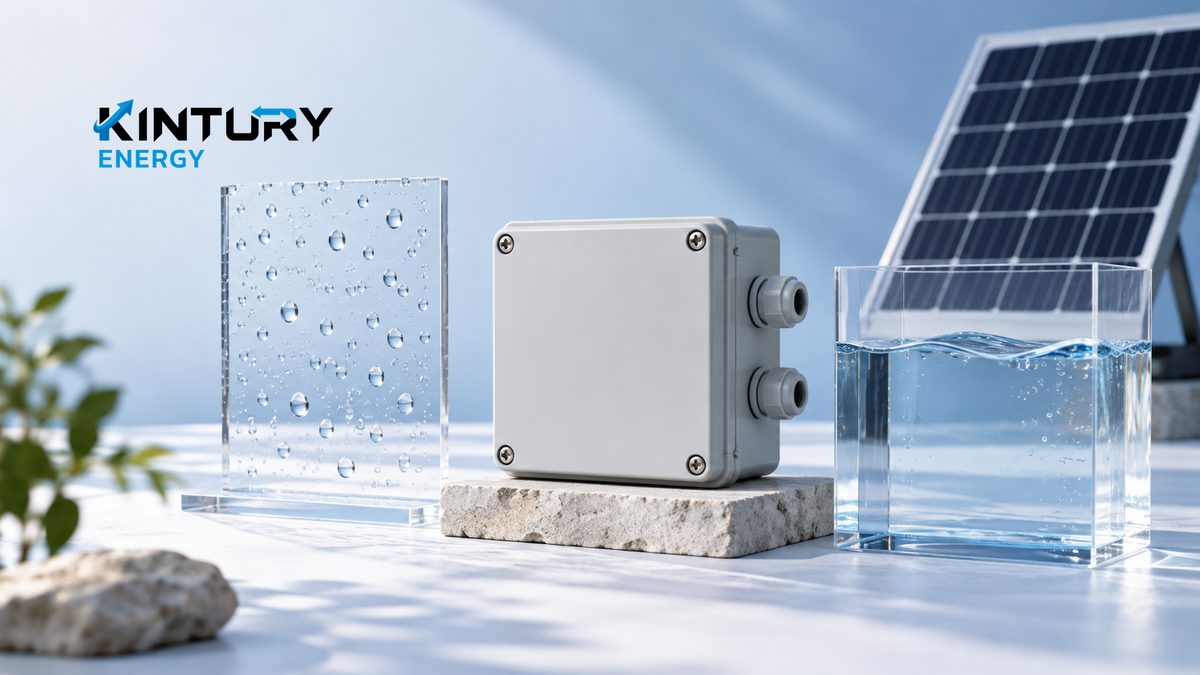
When contacting Kintury Energy, prepare the specification page, model name, site photographs and known cleaning or standing-water history. Request separate answers on location suitability, care and matters requiring a survey. Do not interpret the rating as a guarantee against every type of damage. The images are conceptual models of water exposure, not test results or company installation projects.