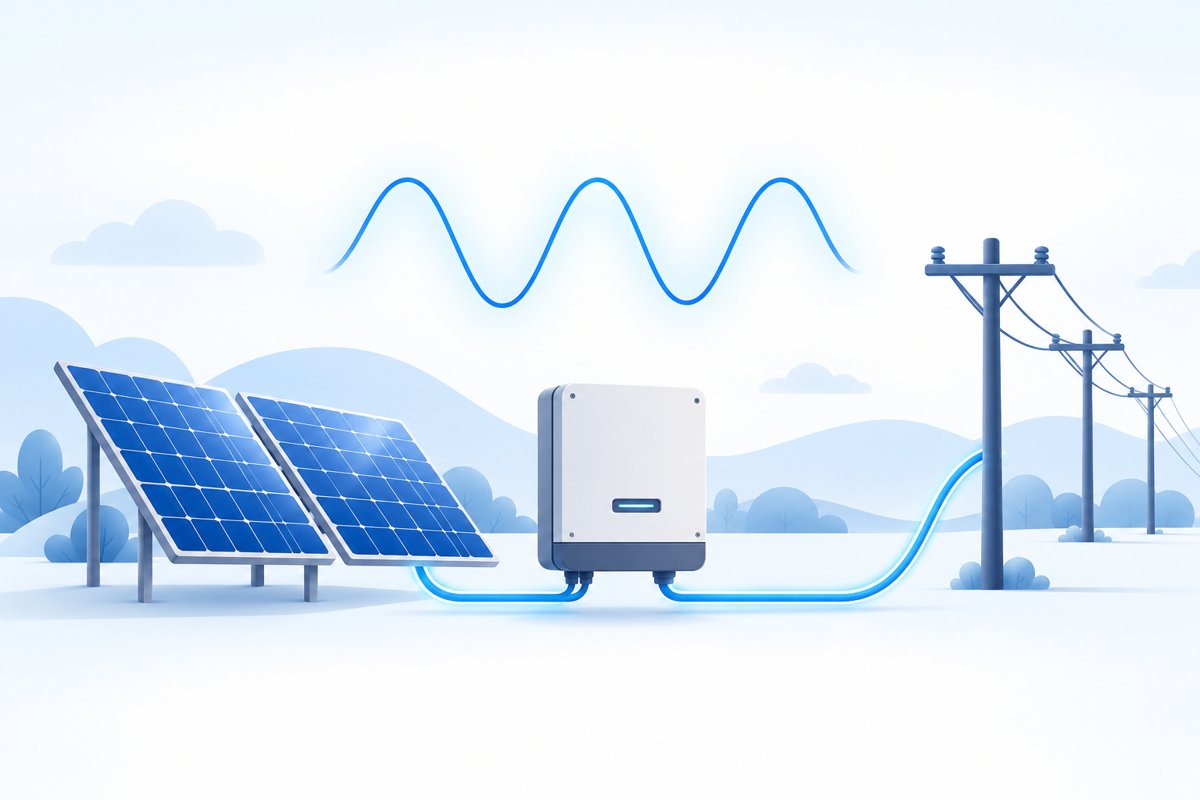

Good sunlight does not identify the faulty component
When an inverter stops with a Grid Overvoltage message, first confirm its model and complete event text, then have the responsible professional investigate the AC connection. A production graph alone does not establish panel failure. Adding panels to compensate for the missing output may not address a protective shutdown.
The cited SMA model manual associates overvoltage events with high grid voltage or impedance at the connection point and explains that the inverter may disconnect. This supports an investigation, but event numbers, voltage limits and reconnection behavior must be checked against the actual model and project connection requirements. A foreign model manual does not set permitted Thai operating limits.
Separate AC, DC and power limiting
The DC side receives panel power; the AC side connects to building and utility systems. Read which side the overvoltage message identifies. DC overvoltage calls for a different investigation from grid overvoltage. A flat power curve caused by limiting is also different from disconnection. All can reduce expected energy, but they require different evidence.
Hypothetical example: a building records midday shutdowns on two days, but the inverter works during a morning visit. That single visit cannot establish that the midday issue is resolved. Request checks covering the affected operating period and, where available, other inverters on site. Timing alone does not establish whether the utility or internal wiring is responsible.
Prepare evidence that can be compared
Provide system identification, model and unit number, timestamps, complete event text, power graphs and available app readings with their field names. Identify whether times come from the app or observation. Preserve separate phase readings where shown, keep original files and do not invent missing values. Note any known electrical alterations or major load switching during that period.
Ask the professional to document measurement locations and operating conditions so that grid-side and internal AC-path hypotheses can be distinguished. If utility coordination is needed, provide findings and event periods rather than only saying that voltage is high. Building staff should not open enclosures, handle terminals or perform live measurements merely to complete the report.
Close the issue with evidence, not just a restart
Do not widen accepted voltage limits, disable protection or repeatedly reset the inverter to force production. Changes require the responsible professionals and applicable approvals. SMA directs utility coordination for out-of-range grid conditions and relevant approval for operating-parameter changes. Smoke or a burning smell calls for the site emergency plan rather than further graph collection.
A closeout report should distinguish confirmed causes, corrective work and follow-up conditions. Record the limitation if the symptom did not occur during testing. When consulting Kintury Energy within the project scope, bring model details and event records to agree on further checks, utility coordination and the evidence needed to confirm resolution.