
Start with when the car is parked
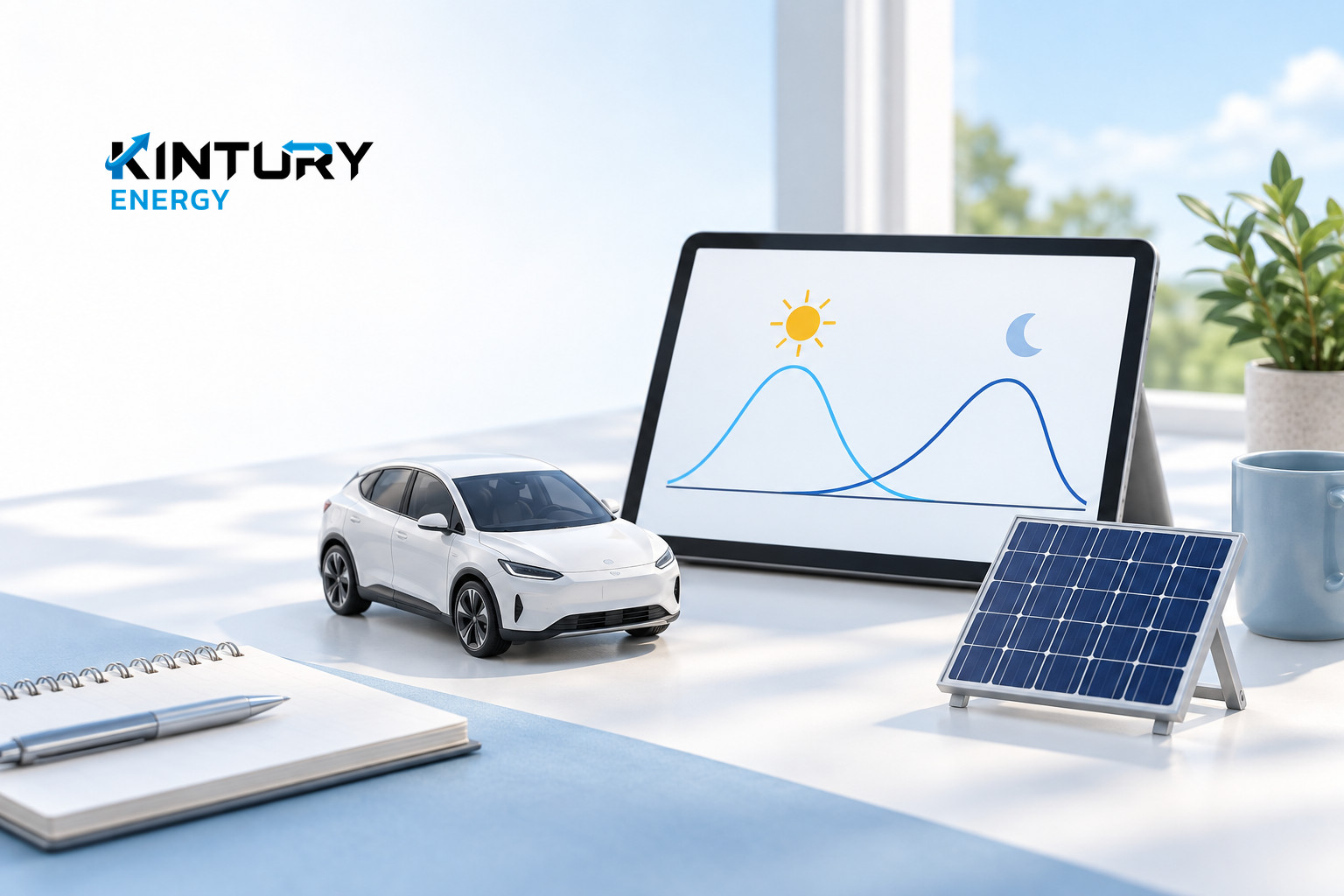
Many people consider solar because they plan to buy an EV, but the car leaves in the morning and returns in the evening. First ask where charging energy will come from at that time. Equal totals for daytime solar generation and overnight charging do not establish that the car uses power directly from the panels. Separating timing and energy paths makes proposals easier to discuss against actual routines.
Daytime electricity does not wait until evening by itself
The US Department of Energy explains that storage allows solar energy to be used at a different time from generation, with losses during storage and retrieval. A system without storage should therefore not be assumed to retain daytime electricity for overnight charging. The actual supply and energy management depend on the system design, not simply the number of panels.
Record where the car is and when it must be ready
Log working days and days off separately, including arrival at the charging point, required departure time and charging energy from actual records where available. Mark estimates as estimates. Do not substitute the battery’s full capacity for the energy that needs replacing each day. For several vehicles, note whether they charge together or in turn, without sizing electrical circuits yourself.
Compare scenarios before deciding on a battery
Ask the designer to separate at least two scenarios: the current charging routine and shifting some charging to daytime when the car is actually present. If storage is proposed, identify usable energy, output constraints and other loads sharing it. Storage is an option to assess for cost and suitability, not an automatic recommendation for every car charged at night.
Distinguish energy flows from electricity billing
In a hypothetical example, daytime generation equals the car’s overnight energy use. You still need to know how much the building consumed during the day, what happened to any surplus and where night-time power came from. Do not subtract the totals and treat the result as the bill. Check the applicable tariff, meter conditions and agreements, without assuming every system can sell surplus or offset units across different times.
Provide the schedule for a site-specific assessment
Before contacting Kintury Energy, prepare bills, a parking schedule, existing charging-point information and plans for additional vehicles. Clarify whether the aim is better daytime use, lower costs or backup power, as these are different questions. Have qualified personnel assess the electrical system and actual connection before selecting equipment. This article helps organise questions; it is not an installation design or a household-specific savings guarantee.