
Start with the question the design should answer
Choosing which way solar panels face involves more than a compass. Building owners should also ask how the proposed design fits the actual roof and the business's electricity-use hours. This article helps interpret design reasoning; it is not a guide to setting installation angles or directing adjustments yourself. No direction is promised to perform identically in every province.
Separate direction from tilt
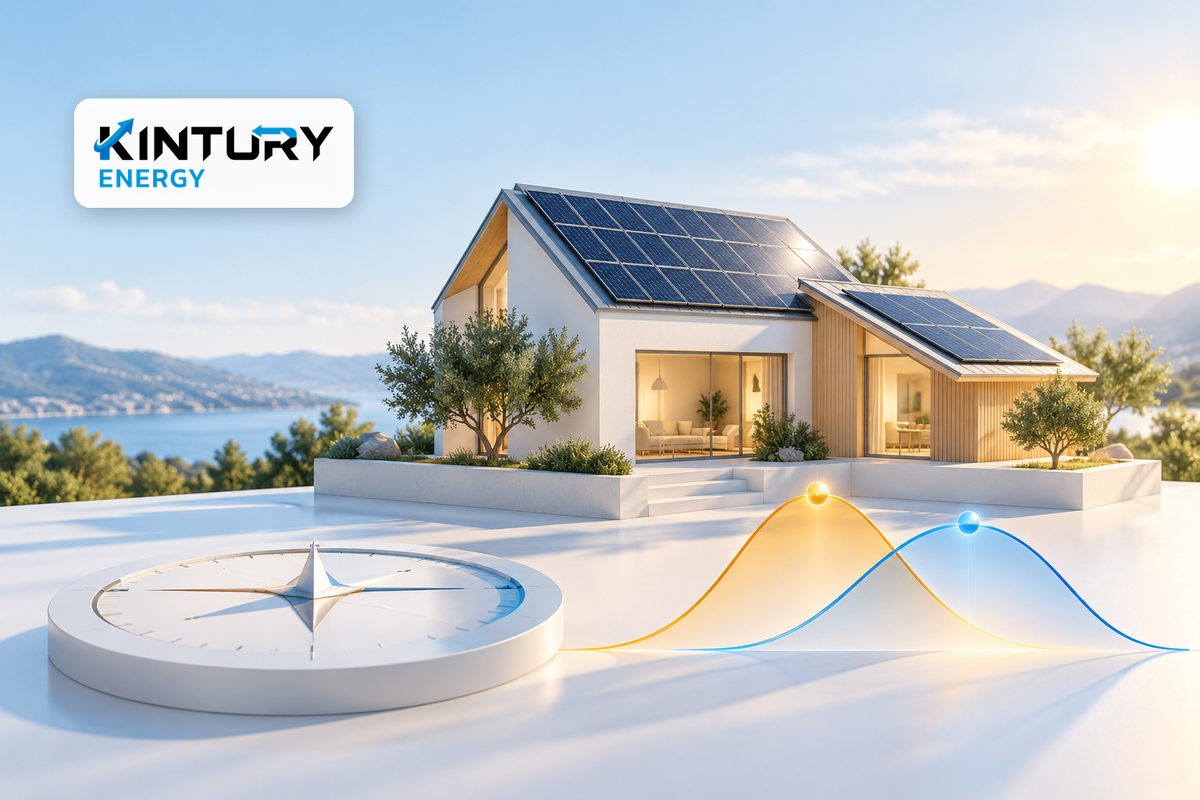
Orientation describes the direction the panel face points, while tilt describes its angle from horizontal. Two roof faces may point in different directions despite similar slopes. The U.S. Department of Energy explains that angle selection relates to latitude, structural orientation and electrical-load requirements. Ask the designer to specify the site's actual inputs rather than immediately copying an angle from another building.
Ask what output is being compared
When reviewing a proposal, ask whether the figures show annual energy alone or also the timing of production. An option that looks attractive in total output still needs checking against the business's consumption hours. Compare alternatives using the same weather data, period and assumptions. Graphs from different sources do not establish that one roof face will certainly outperform another.
Compare the design with building routines
For example, an office starting early and a business with an afternoon load increase may use similar totals but raise different timing questions. Give the design team operating hours and available consumption records, then ask how each option addresses those periods. Separate planned shift changes from observed data. Do not turn an illustrative graph into a guaranteed savings figure.
Request the reasoning behind a multi-face layout
If a proposal distributes panels across several roof faces, request a layout showing areas, panel counts and relevant constraints. Ask how the team matches equipment to each section. Have the responsible specialists consider shading, structure, maintenance access and electrical design together. Do not assume panels must always be tilted more steeply or redirected, since changes can affect mounting work and site constraints.
Keep a traceable comparison
Before accepting the design, request a summary of alternatives, inputs and reasons for the final choice. Keep assumptions and unresolved checks with the project records. Kintury Energy lists survey and design services, so roof plans and usage hours can support a discussion, subject to confirmation of the actual assessment scope. Orientation is one design factor, not a guarantee of output or payback time.